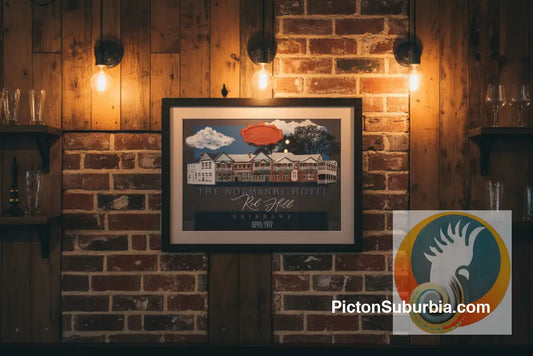
Collection: Red Hill Collection
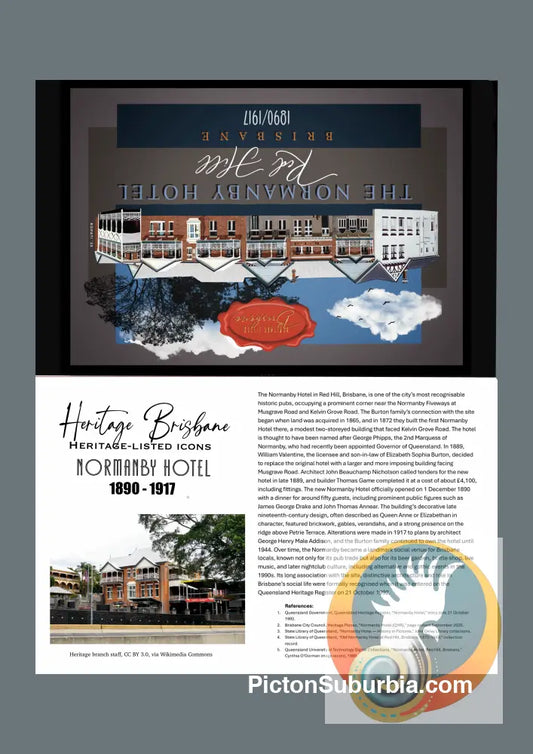
Red Hill is one of Brisbane’s oldest inner-city suburbs, with a history dating back to the mid-nineteenth century when the area was first subdivided for semi-rural estates during the 1860s. 1 The suburb takes its name from the distinctive red-coloured soil and rock of its steep hills, which both defined its landscape and initially made settlement difficult. 2&3 Despite these challenges, residential development increased through the late nineteenth century as land was subdivided into estates such as Bristol Estate and Ballantyne Estate, attracting working-class residents and small industries including brickmaking, quarries, and local businesses. 2&4 The arrival of tram services along Musgrave Road and Enoggera Terrace in the late 1890s significantly improved accessibility and encouraged further growth, shaping Red Hill into a closely connected residential community reliant on public transport. 1 During this period, key institutions such as churches, schools, and the Normanby Hotel were established, reinforcing the suburb’s social and commercial identity. 1 In the twentieth century, Red Hill experienced a decline in popularity between the 1940s and 1960s as newer suburbs expanded, but from the 1970s onward it underwent renewal due to its proximity to the Brisbane CBD, elevated views, and preserved colonial-era architecture. 1 Today, Red Hill is recognised as a historic suburb that reflects Brisbane’s early urban development, with many heritage-listed buildings and streetscapes that illustrate its evolution from a challenging hillside settlement into a desirable inner-city residential area.
References

-
Normanby Hotel: Red Hill - Tea Towel
Vendor:Picton SuburbiaRegular price $37.00 AUDRegular price -
Normanby Hotel: Red Hill - Greeting Card Pack / Set of 5
Vendor:Picton SuburbiaRegular price $17.99 AUDRegular price -
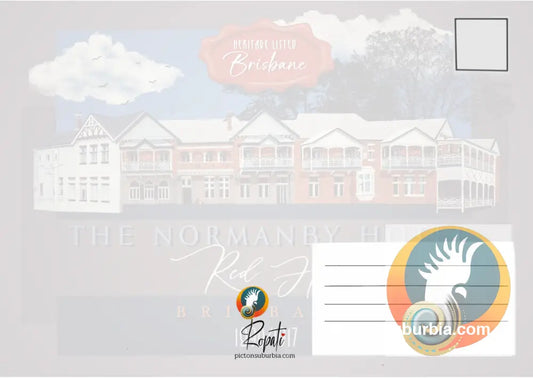
Normanby Hotel Postcard / Set of 5/ A6 or A5 /
Vendor:Picton SuburbiaRegular price From $4.00 AUDRegular price -
Normanby Hotel: Red Hill - Tee
Vendor:Picton SuburbiaRegular price $49.00 AUDRegular price -
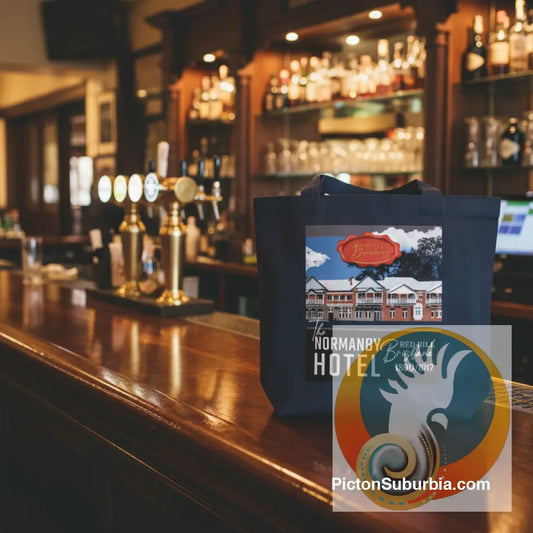
Normanby Hotel: Red Hill - Tote
Vendor:Picton SuburbiaRegular price $48.00 AUDRegular price -
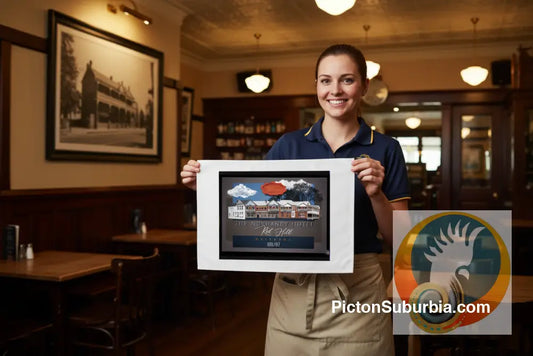
Normanby Hotel: Red Hill - Art print.
Vendor:Picton SuburbiaRegular price From $30.10 AUDRegular price